
funders forum 2025
NYBORG EDITION
The Architecture of Aligned Ocean Capital

Bridge the missing middle & scale ocean solutions through aligned capital, options design & next generation capital stacks.
KEYNOTE SPEAKERS
Pascal Lamy - President, Paris Peace Forum
Lykke Ogstrup Lunde - Chair, VELUX Foundation
Marta Marrero - Europe Director, Oceans 5
Darko Manakovski - CEO, Funders Forum & MNK Global
Kestutis Sadauskas - Deputy DG, DG Mare, EU Commission
Fanny Tham Ratz - CEO, Race for the Baltic
Magus Magnusson - CEO, Capital4Development
PARTNERS
VELUX Foundation
European Commission
Danish EU Council Presidency
EU Mission Oceans
MNK Global
The Nyborg Funders Forum convened at a moment when ocean systems no longer move at the pace of political cycles, election calendars, or institutional processes. Marine ecosystems are shifting on decadal timescales, while funding structures, governance frameworks, and capital mandates often remain anchored in shorter term logic.
In Nyborg, forty senior leaders from philanthropy, public institutions, finance, venture and institutional capital, and science stepped beyond sector boundaries to examine what many described as the missing middle — the space where innovation matures, where pilots stall, and where promising initiatives struggle to transition from early backing to durable scale.
The Forum created conditions for candid, high integrity, and disciplined exchange. Participants clarified systemic risks, surfaced fragmentation across capital types and mandates, and recognised that oceans must increasingly be treated as strategic infrastructure requiring coherent, long horizon capital architecture.
Nyborg’s purpose was direct but ambitious: to test whether different capital logics — grants, catalytic capital, venture and growth investment, public instruments, and long term institutional capital — could be better aligned, independently or in structured constellations, and whether such alignment could form the basis for credible, investable pathways commensurate with the pace and scale of ocean change.

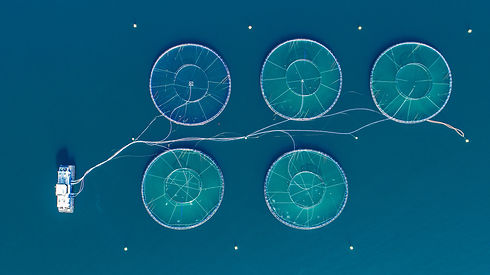
Nyborg revealed that we hold the ideas and innovation needed for ocean stability, but only coordinated capital and deliberate design can transform pilots into durable outcomes
Nyborg exposed several hard truths. Fragmentation remains fatal; oceans function as a single system, yet funding behaves as if it can be carved into projects. Time is decisive; politics works in years, oceans in decades. Trust is infrastructure; without it, capital cannot align. The missing middle remains the greatest bottleneck — not ideas, but the connective tissue that carries innovations from pilots to system-wide scale: governance prototypes, science-policy translation, MRV, and shared risk frameworks. Philanthropy emerged as uniquely catalytic, not because it funds at scale, but because it can finance the preconditions of scale that others ignore. What Nyborg demonstrated, above all, was that orchestration is not overhead. It is enabling infrastructure. When properly designed, it turns isolated initiatives into coherent portfolios and creates the conditions in which capital can act systemically rather than episodically.
01.
Funders Forum need and value validated and endorsed by funders and partners.
02.
Orchestration and learning are critical for aligned capital and the design of next-gen capital stacks and options.
03.
Strategic risk is central to scaled and diversified ocean funding (from market investments to portfolio capital deployment)
outcomes
the path ahead: from alignment to architecture and options design
Nyborg was not an endpoint. It was a proof of concept that leaders with different mandates, incentives, and time horizons can recognise shared systemic risk and begin shaping a coordinated response.
The Forum demonstrated that the essential ingredients already exist: strong science, credible innovation, emerging policy direction, and committed capital across philanthropic, public, and private domains. What remains underdeveloped is the architecture that connects these elements and enables capital to scale where it can have the greatest systemic effect. Political cycles, fragmented mandates, and disconnected initiatives continue to prevent promising solutions from reaching the scale and continuity the ocean challenge demands.
The path ahead is the deliberate design of that architecture. This requires clarifying which forms of capital are best suited to different points along the risk and maturity curve, and designing capital stacks that combine philanthropic, public, venture, institutional, and private investment into coherent deployment pathways. It calls for strengthening the connective tissue between pilots and implementation, improving translation between science, policy, and investment, and building the orchestration capability that allows capital to align — independently or in coordinated constellations — rather than disperse.
Above all, it depends on building durable trust between institutions. Trust is the foundation of any capital strategy capable of enduring beyond electoral cycles, policy shifts, or market volatility.

The interest from Cyprus, Ireland, and other global partners in hosting future editions signals that this is not simply another convening, but the early construction of durable field infrastructure. What began in Nyborg can evolve into a high integrity platform that directs capital to areas of greatest systemic value, whether resilience infrastructure, restoration, data systems, or emerging ocean economy pathways.
This is not a movement. It is the disciplined build out of capability. A place where complexity becomes navigable, where shared intelligence strengthens allocation decisions, where portfolios replace isolated projects, and where capital stacks are deliberately structured to unlock scale.
If sustained, the work initiated in Nyborg can help shift Europe from fragmented initiatives toward coherent and investable capital architecture, strengthening the ocean systems that underpin long term economic resilience, environmental stability, and collective security.
